What wondrous facts of life could humans design
and leave behind for beings beyond our time?
Methodology: The Outer-Human Framework
Respect Dissonance
Studio JOCH&MEIS specializes in differential perspectives on Non-Human Centered Design, starting with moral relativity and a fundamental respect for dissonance. The objective poses a conscious counter to the Post-Humanist trajectory of today’s ‘Information Age’. Instead of aiming for transcendence, designs by JOCH&MEIS are allowed to be surrendered to natural forces through transference or decay.
Non-human Actors
What makes this approach unique is the active incorporation of how creation often persists beyond the point of our involvement, both intentionally as well as unintentionally. By identifying actors that are present, affected, but overlooked by creators, the scope of OHD extends to functionalities outside of the human realm, be it non-human actors such as systems, organisms and natural forces, but also timeframes outside of our perception.
Starting Conditions
Whereas design traditionally focuses on research and end results, OHD alters common design processes at their inception by actively configurating their starting conditions. The methodology can stand on its own, as well as be integrated in most standard design processes alongside every phase. It provides guidelines to distance ourselves from the concept of short-term human-centered thinking and requires a fundamental respect of the inherent dissonance that is at the core of life as we know it, which is marked by non-directional diversity.
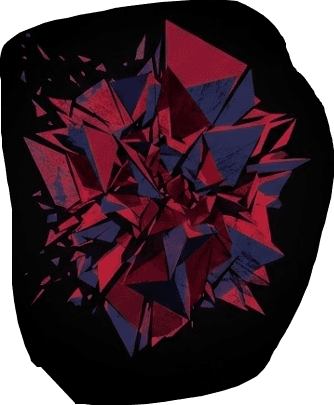
Respect Dissonance
Our framework rejects the pursuit of a singular, "perfect" human solution. It embraces the inherent conflict and non-directional diversity of life as it may exist at any given time. By maintaining moral relativity, the design does not attempt to "correct", but to exist within contradictory and often uncomfortable realities.
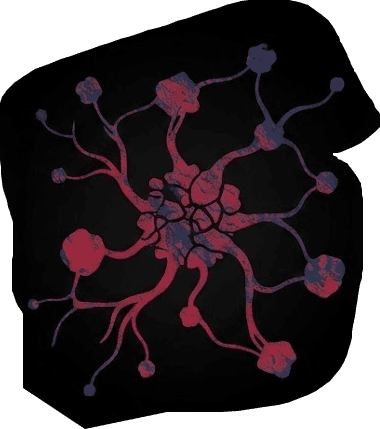
Non-human actors
The scope of design is expanded to include entities typically ignored by human-centered processes. This includes biological organisms, natural forces, and connected systems. The goal is to identify how these actors are affected by- or interact with a design once it is no longer under human supervision.
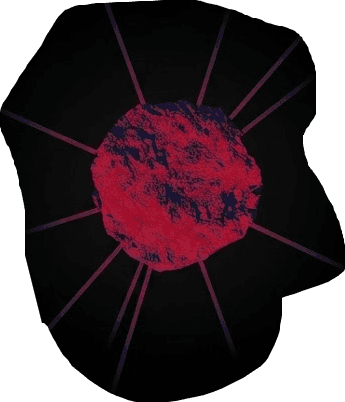
Starting Conditions
Unlike traditional design that focuses on the final product, our approach prioritizes the starting conditions. By designing the starting conditions for long-term independence, the creator allows the work to evolve and integrate into the environment over unusual timeframes, surrendering the outcome to natural processes.
All actions have unintended reactions.
Through OHD we practice predicting the unintended.
Get in touch!
About JOCH&MEIS
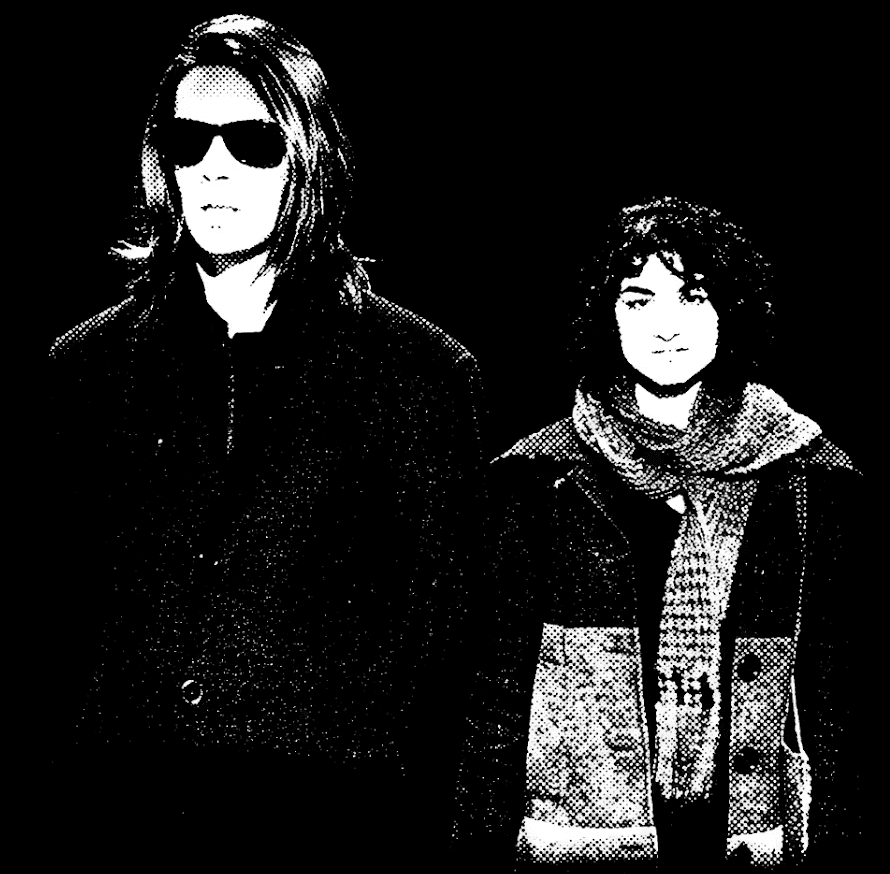
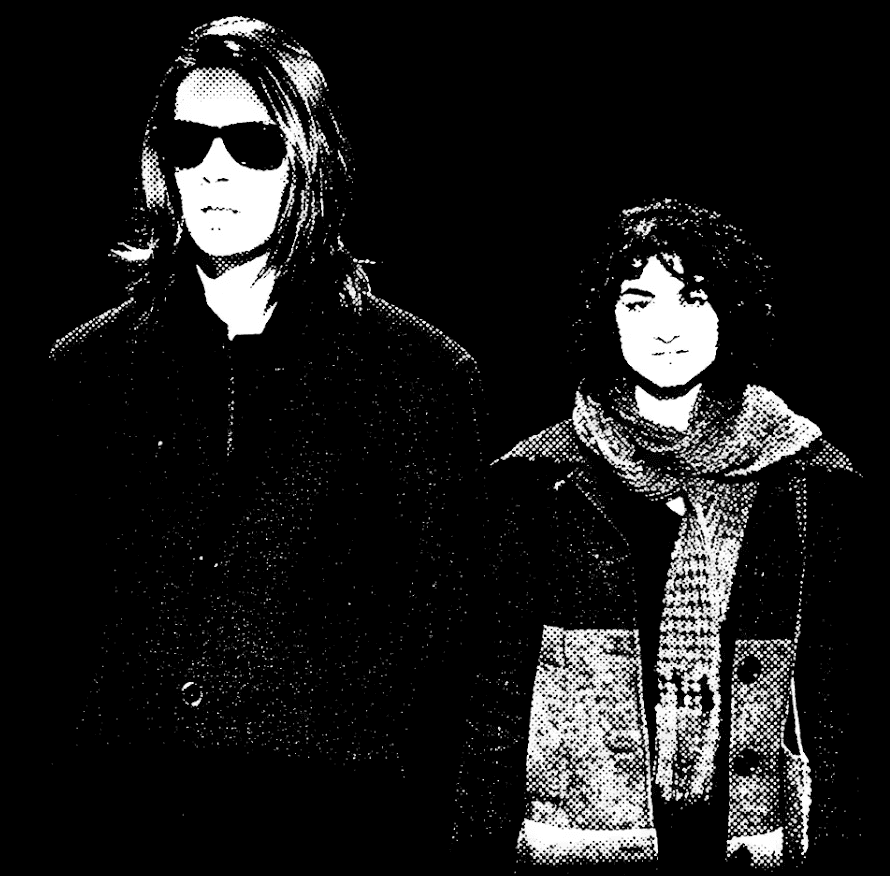
Joch Jansz and Meis سكر met in Eindhoven as students at the TU/e’s Industrial Design faculty. With well over a decade of unusual joint (ad)ventures between them, the duo is currently specializing in Outer-Human Design together. As designers they hone in on a combination of thought experiments and field notes to verify and configure the position of tangible designs throughout all scopes of time.
// LOG: THOUGHT_EXP_03 // STATUS: SPECULATIVE TRANSFERENCE // HYPOTHESIS: Human extinction as a functional service to future biologies. This scenario proposes that the entirety of human industrial activity, specifically global warming and the deposition of microplastics, was not an accidental crisis, but a subconscious, necessary stage of Earth's evolution. Microplastics are not waste; they are the required fuel and substrate for the next dominant era—the plastisphere.
// FIELD OBSERVATION [UNUSUAL TIMEFRAME]: // ------------------------------------ // // Observe the co-optation. We must identify new actors. Organisms are not 'contaminated' by microplastics; they are evolving with and because of them. A future is possible where a polymer matrix is as inherent to life as a carbon backbone is now. In a post-human environment, we must track the migration of plastic particles as intentional metabolic drivers, rather than pollutants.
// FIELD OBSERVATION [SYSTEMIC ACTOR INTERACTION]: // ------------------------------------------------ // // In a world without active human intent, observed ocean currents are not just 'shifting due to temperature.' They are consciously placing plastic drifts in precise proximity to upwelling zones. They seem to be configured to accelerate the interaction between polymer particles and deep-time organisms. The ocean is curating the plastisphere's foundation. This transfer of control from human industry to global force seems intentional.